
Does finding a job seem difficult in 2026? Inflation is rising, jobs are becoming scarce, and traditional work isn’t offering the freedom you desire. Don’t worry! Starting freelancing in 2026 can change your life without any investment – earn ₹50,000 to ₹200,000 from the comfort of your home, on your own schedule.
Learn how to start freelancing in 2026 in this article: What is freelancing, its scope in 2026, and how to start without any investment. We’ll cover trending skills for beginners, finding jobs, the best platforms, payment tips in India, and a 30-day plan. Ready? Let’s get started!
What is freelancing?
Freelancing is a way of working where you use your skills to complete project-based work for clients without being employed full-time by a company. This means you get paid after completing your work, and there are no fixed office hours or a boss – which is why people want to know how to start freelancing in 2026.
For example, if you’re a graphic designer, you can create a logo design gig on Fiverr. In 2026, freelancing has become even easier thanks to AI tools. But remember, this isn’t just about doing work, but about running your own business.
Moreover, freelancing connects you with global clients who pay more than those in the Indian market.
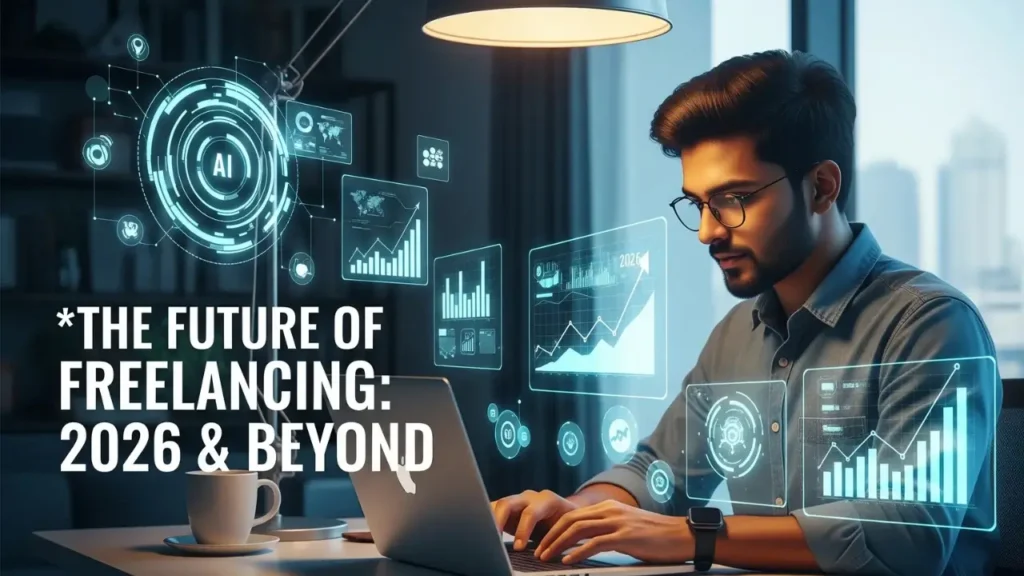
What will be the scope of freelancing in 2026?
The scope of freelancing in 2026 is going to be truly sky-high. The gig economy is growing rapidly worldwide, and its market size has already surpassed $500 billion. Experts estimate that in the next two years, India alone will be home to more than 23.5 million freelancers—meaning every fourth skilled young person will be venturing into freelancing.
With the advent of AI, routine and repetitive tasks are becoming less common, but conversely, the demand for human-centric skills such as creativity, empathy, problem-solving, and leadership is increasing exponentially. Those who learn to use AI as a tool will be far ahead of the rest by 2026.
Trending Shifts in 2026 Freelancing:
AI Integration Explosion:
Freelancers will be able to deliver work five times faster and more accurately using AI tools—whether it’s content, videos, or automation workflows.
Remote Work → Mainstream:
Global reports show that approximately 47% of the workforce will adopt freelancing or remote work in some form. This means that opportunities will no longer be limited to local areas, but will be available worldwide.
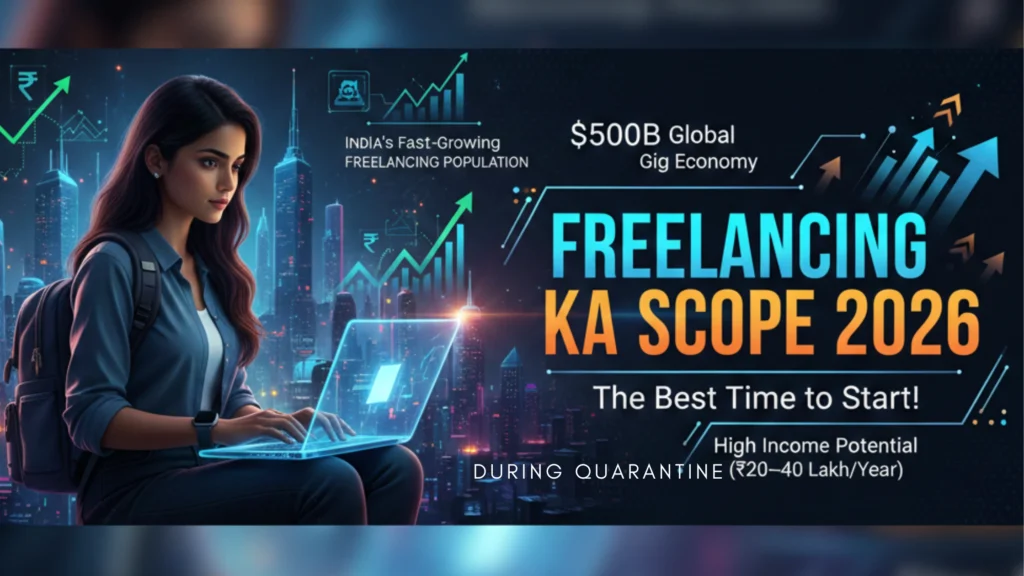
If you’re wondering “How to start freelancing in 2026?”, believe me—you probably won’t get a better opportunity for many years to come.
How to start freelancing without investment?
How to start freelancing in 2026: A beginner’s guide with no investment required.
1. Choose a skill and build a portfolio.
- Choose skills in demand for 2026: writing, design (Canva/Inkscape), virtual assistant, SEO.
- Create a free portfolio: Showcase your best work on Behance, Medium, LinkedIn, or Google Drive.
2. Get on the platform and find your first client.
- Complete your profile fully on platforms like Upwork and Fiverr.
- Send high-quality proposals for small projects. Initially, focus on building up your reviews.
3. Marketing and Growth
- Stay active on LinkedIn and share your expertise.
- Provide professional service to every client – that’s your best marketing strategy.
- Keep learning about the trends for 2026 through YouTube and free courses.
The mantra for getting started: Focus on one skill, build a portfolio, and start sending out your first proposals today. The entire path to starting freelancing in 2026 depends on your quality and perseverance.
Best Freelancing Skills for Beginners in 2026
If you’re wondering how to start freelancing in 2026, the first step is choosing the right skills. The freelancing market is growing rapidly in 2026—the global gig economy has already reached over $500 billion, and millions of new freelancers are expected to join in India. Therefore, some skills will be in particularly high demand for beginners:
1. Content Writing & Copywriting
Despite AI tools, the demand for high-quality human writing is increasing in 2026. 70% of brands in the digital market will regularly outsource content creation.
2. Graphic Designing (Canva + Basic Design)
Due to the growth of social media, the demand for graphic designers is expected to increase by 35%. Canva has made it easier for beginners to enter the field.
3. Video Editing
The boom in short-form videos will continue. According to reports, the demand for video editors is increasing by 30–40% every year.
4. Social Media Management
78% of brands rely on SMM freelancers. The need for experts who can increase engagement will grow even faster by 2026.
5. Web Designing (No-Code Tools)
Platforms like WordPress, Wix, and Shopify have made web design simple. Thanks to the growth of e-commerce, this skill is evergreen.
6. Virtual Assistance
Remote businesses are growing, which is why the demand for virtual assistants is increasing at an annual growth rate of over 25%.
7. AI Tools Handling & Automation
Learning to use tools like ChatGPT, Notion AI, Zapier, and Canva AI is one of the most practical skills for 2026. Automation jobs are growing 5 times faster than other jobs.
How to find freelance jobs? (Step-by-step guide)
If you’re wondering “how to start freelancing in 2026” and land your first project, understand this crucial point: clients only give opportunities when they believe you can effectively solve their problem. Initial success doesn’t depend on a course or a large investment, but rather on your presentation and how you showcase your skills.
Building a portfolio: Your first and most important need.
Creating an impressive portfolio at the beginning is the most important step in learning how to start freelancing.
- 3 to 5 sample works are sufficient, but they should be clean, professional, and showcase your quality.
- In freelancing, approximately 70% of clients look at the portfolio first, and only then do they pay attention to the profile.
- Include a variety of samples to give the client a comprehensive understanding of your capabilities.
Setting up the right profile on freelancing platforms
The second major step in starting freelancing in 2026 is to establish a strong presence on various platforms.
- Platforms like Fiverr, Upwork, and LinkedIn have a lot of competition, but beginners with the right profile can easily stand out.
- Clearly state in your bio what you do, how you can help, and what kind of work you’ve done before.
- Clients value honesty and clarity above all else. Avoid writing anything that might cause confusion.
- Tip: Use free tools like Canva or Google Docs. These will form the basic foundation for “How to Start Freelancing in 2026.”
Send each proposal in a personalized way.
- Don’t send the same proposal template everywhere.
- Every client has different requirements—so address their specific problems in the proposal and explain how you will provide a practical solution.
- Research shows that personalized proposals have an approval rate 3–4 times higher.
Start with small projects: Building trust is essential.
To start freelancing in 2026, you will need to be patient.
- Don’t be afraid to take on small projects or low-budget jobs at the beginning.
- Approximately 60% of successful freelancers started their careers this way.
- Small jobs build ratings and trust, and that trust leads to bigger projects later on.
Consistency is the key to success.
Getting a job in freelancing is not a matter of luck, but a result of consistency.
- If you dedicate a little time each day to improving your profile, sending proposals, and honing your skills, landing your first client won’t be difficult.
- Many beginners see their first online earnings within 2 to 4 weeks.
- The secret to starting freelancing in 2026 is taking small, consistent steps every day.
If you follow these points, your start in the world of freelancing in 2026 will be strong and stable. Remember, success doesn’t come overnight, but taking the right steps will surely lead you to your goal.
Best freelancing platforms for beginners:
Friends, the first step to starting online earning through freelancing is choosing the right platform. For beginners, low-competition and easy-entry platforms are the best. In 2026, local sites like Truelancer are growing rapidly in India, offering approximately 40% less competition compared to global platforms. Upwork and Fiverr are still at the top, but platforms like Truelancer and PeoplePerHour are proving to be more beginner-friendly for new freelancers.
| Platform | Kyun Best Beginners Ke Liye? | Commission | India Focus |
|---|---|---|---|
| Fiverr | Gig-based, quick start bina bidding ke. Portfolio banao aur clients aaye. | 20% | High, local gigs zyada |
| Upwork | Guided profile setup, entry-level jobs. 2026 mein AI skills ke liye 30% zyada opportunities. | 10-20% | Global, lekin India clients badh rahe |
| Truelancer | Low competition, India-based. Beginners ko easy approval. | 8-10% | Bilkul, local payments UPI se |
| Freelancer.com | Contests se practice, small projects. | 10% | Medium, bidding easy |
| PeoplePerHour | Hourly jobs, Europe/India mix. Low entry barrier. | 15% | Growing in India |
Start with Fiverr — create a gig like “Logo design for ₹500” and collect reviews. This is an easy way to start freelancing. According to 2026 projections, gig hiring on these platforms will increase by 25%.
Common Mistakes Beginners Should Avoid
To get off to a better start, it’s also important to know what not to doExpecting to earn money directly without skills
1. Looking for a job without building a portfolio
2. . Expecting to earn money directly without skills
3. Sending the same proposal everywhere.
4. Starting with high-budget projects.
5. Lack of consistency
Freelancing vs Full-Time Job (2026 Comparison)
| Feature | Freelancing 2026 | Full-Time Job |
|---|---|---|
| Income Potential | Unlimited (skill-based) | Fixed salary |
| Work Timing | Flexible | 9–5 |
| Freedom | High (choose clients/projects) | Limited |
| Growth Speed | Fast | Slow/Moderate |
| Investment | Zero (skill only) | Education + travel cost |
| Opportunities | Global | Mostly local |
| Work Security | Client-based | Job stability |
Skill-Wise Earning Potential Table (2026)
In 2026, online earnings will increase based on freelancing skills, especially in AI and technology. Predictions: AI freelancers will see 50% growth, with an average income of ₹25 lakh per year. Demand in India for tech projects will be up by 40%.
| Skill | Learning Time | Beginner Earning (Monthly) | Pro Earning (Yearly, 2026 Prediction) | Demand Growth |
|---|---|---|---|---|
| AI/ML Tools | 1-2 Months | ₹15,000-30,000 | ₹30-50 lakh | 50%+ |
| Web Development | 2-3 Months | ₹20,000-40,000 | ₹20-40 lakh | 25% |
| Content Writing | 1 Month | ₹10,000-25,000 | ₹15-30 lakh | 20% |
| Graphic Design | 3 Weeks | ₹12,000-25,000 | ₹18-35 lakh | 30% |
| Video Editing | 2 Weeks | ₹15,000-30,000 | ₹20-40 lakh | 25% |
| Digital Marketing | 1 Month | ₹18,000-35,000 | ₹25-45 lakh | 30 |
Conclusion
2026 is being considered a golden year for freelancing. Opportunities have become global, AI tools have made work faster, and clients are ready to hire quality freelancers at good rates. With the right skills, a strong portfolio, and consistent effort, any beginner can start earning a stable income through freelancing.
Remember—freelancing is not just a job, but a professional career that is built step by step.
FAQs
Q1. What is the easiest way to start freelancing?
Learn a skill, create a simple portfolio, and start by creating a profile on sites like Fiverr/Upwork.
Q2. How long does it take to get the first client?
Beginners usually land their first project within 2–4 weeks if they send out daily proposals.
Q3. Is it possible to do freelancing using a mobile phone?
Yes — writing, designing (using Canva), SMM, and virtual assistant work are all possible from a mobile phone.
Q4. Is freelancing a safe career option in 2026?
Yes, opportunities are growing rapidly due to AI integration and the remote work boom.
Q5. Is initial investment required?
No, freelancing can be started without any financial investment.
One Response