

The world of making money online in 2026 is more competitive than ever. AI-generated content is everywhere, privacy laws have become stricter, Google’s mobile-first indexing is fully mature, and the Helpful Content Update still dominates search results. Despite this, a well-built affiliate marketing website remains one of the most reliable ways to build long-term wealth.
I’ve been building affiliate sites for the past 2-3 years, and the truth is, an affiliate marketing blog started with the right strategy can still generate consistent, scalable income. The difference is that in 2026, you need a system, not shortcuts – the right niche, the right platform, and the right content approach.
In this step-by-step guide, you’ll learn how to create a website for affiliate marketing from scratch, incorporating the best practices of 2026. From niche selection to SEO, content, monetization, and scaling – everything will be explained practically and clearly.
Why Affiliate Marketing Websites Are Still Thriving in 2026
Many people ask if affiliate marketing is dead in 2026. My answer is always the same—no, it’s just not as easy anymore. Those who build affiliate marketing websites the right way are still thriving.
Today, brands need more trustworthy publishers than ever before. Affiliate content feels more natural to users compared to direct ads, especially when the content is genuinely helpful. This is why niche sites for affiliate marketing are still a significant part of brands’ marketing strategies.
AI tools have certainly sped up content creation, but Google now clearly prioritizes E-E-A-T (Experience, Expertise, Authoritativeness, Trust). This means that generic content won’t rank; only affiliate marketing blogs written with real experience will.
In terms of earning potential, the average affiliate site can still earn anywhere from $500 to $10,000+ per month. I’ve personally seen many sites generating a stable income solely through comparison posts and in-depth reviews.
Another major reason is diversification. A successful affiliate marketing website today doesn’t rely solely on affiliate links. Email lists, display ads, digital products, and brand collaborations—all contribute to a stable revenue stream.
To succeed in 2026, you need to abandon spammy tactics. But if you adopt a value-driven approach, affiliate marketing remains one of the most sustainable online business models.
Choosing the Right Niche for Long-Term Success
If you were to ask me the single most important factor determining affiliate success, it would be niche selection. No matter how well you set up your affiliate site, working in the wrong niche can render your efforts useless.

A profitable niche is one where three things are present — demand, buying intent, and monetization options. Traffic alone isn’t enough. People need to be willing to spend money in that niche.
In 2026, evergreen niches are still working. Niches like health, personal finance, software tools, home improvement, and education offer long-term stability. Trending niches might offer quick money, but they also carry higher risk.
Balancing passion and profit is crucial. You should love your niche, but blindly following your passion can be a mistake. I’ve seen many affiliate marketing sites built solely on interest that failed at monetization.
Competition analysis is more important than ever. You need to understand the authority of top-ranking sites, the depth of their content, and whether you can realistically compete.
The right niche is one where you can publish content for the next 3–5 years without running out of ideas. Building an affiliate marketing website without a long-term perspective doesn’t work in 2026.
In 2026, several niches are performing exceptionally well:
Sustainable Tech: Solar panels, electric vehicle accessories.
AI-Powered Lifestyle: Smart home automation and AI productivity tools.
Personal Health & Biohacking: Wearable devices and customized supplements.
Remote Work Infrastructure: Home office setups and cybersecurity tools
Tools to Validate Your Niche
Don’t rely on guesswork to validate your niche. Use both free and paid tools. Google search itself is a powerful indicator — look at search results, ads, and analyze content quality.
Keyword research tools like Ahrefs or Semrush show you what people are searching for and how strong the competition is. Even limited free data can provide the right direction.
Marketplaces like Amazon are a goldmine for niche validation. If there’s a variety of products, reviews are coming in, and the price range is wide — the niche is monetizable.
Common Niche Mistakes to Avoid
The biggest mistake is choosing a niche that’s too broad. Niches like “Health” or “Technology” are death traps for beginners. Building authority is impossible without a narrow focus.
Another mistake is choosing a niche solely based on commission. High commission is useless if there are no conversions. Buyer intent should always be the priority.
The third major mistake is blindly chasing trends. Short-term hype niches quickly fade away, and your hard work sinks with them.
Domain Name and Hosting: The Foundation That Matters
In affiliate marketing, most people treat domain and hosting as a “basic step” and rush through it. But the truth is, the speed, trust, and scalability of your affiliate marketing website are decided right here.
How to Choose the Right Domain Name
In 2026, the power of exact-match domains has diminished, but brandable domains have become more valuable than ever. Short, memorable, and easy-to-pronounce names always perform better.
.com is still the gold standard. If it’s not available, .co or .io are acceptable. Choose niche-specific extensions only if there’s no brand confusion.
Domains with keyword stuffing, like bestlaptopsreviews2026.com, are now outdated. Google gives more importance to brand signals, so think of a natural brand name.
A good domain name is one that:
- Is easy to remember
- Can expand in the future
- Is not limited to a single product
Why Hosting is So Important
In 2026, site speed is not just a UX factor, but a ranking factor. Core Web Vitals are no longer optional. Slow hosting means poor rankings and fewer conversions.
Cheap hosting might seem attractive in the early days, but as soon as traffic increases, problems start. I’ve personally migrated sites simply because the initial hosting choice was wrong.
Best Hosting Providers for 2026 (For Affiliate Websites)
SiteGround
- Excellent speed and support
- Beginner-friendly dashboard
- Pricing: ~$4–$15/month
- Cons: Renewal expensive
Cloudways
- Best for advanced users.
- Scalable cloud infrastructure
- Pricing: ~$11–$30/month
- Cons: Slight learning curve
Hostinger
- Budget-friendly and fast
- Easy setup
- Pricing: ~$3–$10/month
- Cons: Support average
Rocket.net
- Top-tier performance
- Built-in CDN
- Pricing: ~$30+/month
- Cons: Expensive for beginners
If you are serious, don’t compromise on hosting. It’s an investment, not an expense.

Best Platforms to Build Your Affiliate Website in 2026
The next big decision in setting up your affiliate site is the platform. In 2026, there are more options than ever, but not all are equally suitable for affiliate marketing.
Today, people are asking – Wix, Webflow, Squarespace, or WordPress for an affiliate site?
Short answer: WordPress is still the clear winner.
Why WordPress Remains the Gold Standard
The biggest advantage of WordPress is its community and open-source nature. If you need a specific feature for your site, there’s a good chance a plugin for it already exists. Furthermore, WordPress has a long and strong relationship with Google; its code structure is very search engine friendly.
Essential WordPress Plugins for Affiliate Marketers (2026 edition)
- Rank Math SEO: This is my personal favorite for SEO. It helps you optimize your content and add schema markup.
- Lasso or AAWP: To display affiliate links in attractive boxes and buttons.
- WP Rocket: The number one caching plugin for boosting site speed.
- LinkWhisper: To automate and smarten up internal linking.
- UpdraftPlus: For regular backups so your data is always safe.
Step-by-Step: Setting Up Your Website
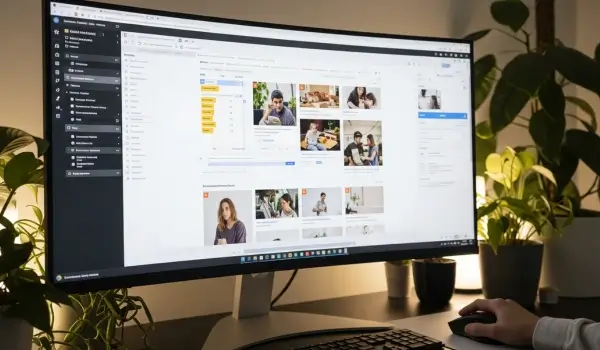
Now comes the real work. Once you’ve purchased hosting, most providers offer a “One-Click WordPress Install” option. After installing WordPress, your first task should be to choose a clean, lightweight theme. In 2026, the era of heavy and complex themes is over. You need a theme that is lightweight and scores well on Core Web Vitals.
I recommend Astra, GeneratePress, or Kadence. All three are very fast and perfect for affiliate sites. After installing the theme, remove unnecessary plugins and install the essential plugins mentioned above. Then, set your site’s permalink structure to ‘Post Name’, which is best for SEO.
Installing SSL and Basic Security
In this age of privacy and security, an SSL certificate (HTTPS) is mandatory. Without it, Google will show your site as “Not Secure”. Most hosting companies provide a free Let’s Encrypt SSL certificate. Additionally, be sure to install a security plugin like ‘Wordfence’ to protect your site.
Creating Essential Pages (About, Contact, Privacy Policy, Disclosure)
To become a professional affiliate marketing blog, you need some legal and informational pages. On the ‘About’ page, showcase your real-world experience (E-E-A-T). Creating an ‘Affiliate Disclosure’ page is crucial, where you clearly state that you earn commissions from the links. This is not only legally required but also builds trust with your readers.
Design and User Experience That Converts
In 2026, affiliate site setup isn’t just about looking pretty; it’s about prioritizing User Experience (UX). Your site should run smoothly on mobile devices, as over 80% of traffic comes from there. Use easily readable font sizes and employ colors professionally.
Page speed is a major ranking factor. If your website takes more than 3 seconds to load, you’ll lose more than half of your customers. Use tools like ShortPixel to compress your images and always use the WebP format. Remember, a clean layout always converts better than a cluttered one.
Creating High-Quality Content That Ranks and Earns
This is where you truly make your mark. In 2026, content isn’t king, but “Helpful Content” is. Google now dislikes articles that are simply stuffed with keywords. You need to answer your audience’s questions. Even when writing a guide on “How to create a website for affiliate marketing,” my focus is on explaining the nuances along with the steps.
Use ‘Topic Clusters’ in your content strategy. Write a main pillar post and then several smaller posts related to it. This builds your ‘Topical Authority’. Use AI for research and outlining, but be sure to add your own voice and experience to the content.
Types of Content That Perform Best
Product Reviews: An in-depth analysis of a single product.
Comparison Posts: ‘Product A vs Product B’ – these convert very well.
Best-of Lists: ‘Top 10 AI Tools for 2026’ – these are best for driving traffic.
How-to Guides: Articles that provide solutions to problems.
How to Write Product Reviews That Convert
The secret to writing successful reviews is honesty. Don’t just mention the pros, mention the cons too. Use original photos and videos. If you show yourself using the product, the conversion rate can increase by up to 200%. Include a ‘Pros and Cons’ table, as users often go straight to that section.
Optimizing Content for SEO (on-page best practices 2026)
Include your main keyword in the title, the first paragraph, and at least one H2 heading. Use ‘Alt Text’ for images. For example, use descriptive text like “WordPress affiliate site dashboard setup”. Don’t forget internal linking; it helps your other pages rank.
Joining Affiliate Programs and Networks
Once your affiliate marketing website is ready and has 10-15 good articles, it’s time to join affiliate programs. In 2026, Amazon Associates is still the best option for beginners because people trust Amazon. But don’t limit yourself to just Amazon.
Other large networks include:
ShareASale: Thousands of brands for every niche.
Impact: Best for modern interfaces and large tech brands.
CJ Affiliate: One of the world’s oldest and most reliable networks.
Rakuten Advertising: For premium brands.
Always pay attention to the ‘Cookie Duration’ when joining. If the cookie is 30 days, it means you’ll earn a commission if someone makes a purchase within 30 days of clicking your link. Always promote products that are relevant to your niche and whose quality you trust.
Monetization Strategies Beyond Basic Links
Once you start your affiliate marketing site, don’t rely solely on links. Diversification is key to success in 2026. Be sure to include an email sign-up form on your website. Your email list is your own asset that no algorithm can take away.
Additionally, once your traffic grows, you can join premium display ad networks like Mediavine or Raptive. This will give you another source of passive income. You can also launch your own digital product (like an e-book or course). Native shopping content and sponsored posts can also generate good income.
SEO Mastery for Affiliate Sites in 2026
In 2026, SEO is not just about keywords, but about understanding ‘User Intent’. Google’s algorithms are now smart enough to understand what the user wants. For keyword research, find long-tail keywords with low competition. Ranking for keywords like “How to create a website for affiliate marketing” might be difficult, but ranking for “Affiliate marketing website setup for beginners in 2026” is easier.
Make full use of Schema Markup. ‘Review Schema’ and ‘FAQ Schema’ increase your visibility in search results. When it comes to backlinks, ‘Quality’ matters more than ‘Quantity’. One link from a high-authority site is more powerful than 100 links from smaller sites. Always follow ethical ‘White Hat’ techniques.
Tracking, Analytics, and Scaling
You can’t improve what you can’t measure. Set up Google Analytics 4 (GA4) and Google Search Console from day one. See which articles are getting the most traffic and where people are leaving your site.
Once your site starts earning $500-$1000 per month, it’s time to scale. You can hire new writers or get help from a virtual assistant (VA). Scaling means more content, more backlinks, and ultimately, more earnings.
Common Pitfalls and How to Avoid Them
I’ve seen many people give up. The biggest mistake is the “Get Rich Quick” mentality. Affiliate marketing is a marathon, not a sprint. Another major pitfall is ‘Shiny Object Syndrome’ – changing your niche or strategy every week. Stick to one thing and master it. Also, never use copy-pasted content; Google will penalize you immediately.

Conclusion
The journey of creating a website for affiliate marketing in 2026 is both exciting and challenging. It’s a skill that can lead to financial freedom. Remember, a year from now, you might wish you had started today. Choose the right niche, build a solid affiliate marketing website, and consistently provide value.
Success doesn’t happen overnight, but if you follow the steps outlined in this guide and remain patient, you too can become a successful affiliate marketer. Now is the time to take action. Choose your domain and start working on your website today!
FAQ
1. Is a website necessary for affiliate marketing in 2026?
Yes, absolutely. Social media platforms can be volatile, but a website is your own digital property where you have complete control. It’s essential for building trust and generating long-term income.
2. How much does it cost to build an affiliate website?
Initially, you only need to pay for a domain (approximately $10-$15/year) and hosting (approximately $3-$10/month). You can start a professional site for under $100 in total.
3. Can I use AI to write content? You can use AI for research and drafting, but in 2026, adding a “human touch,” real-world experience, and editing is crucial for ranking.
4. How long does it take to start earning?
Typically, it takes 6 to 12 months for a new site to start generating traffic and income. This depends on your effort and the competition in your niche.
5. Do I need to learn coding?
No, with WordPress, you can create a great website without any coding knowledge. It’s completely drag-and-drop and user-friendly.