

November 2025 has once again shaken the U.S. digital advertising ecosystem. If you’re running a serious budget on Facebook Ads (Meta Ads)—whether you’re a Shopify brand, a SaaS founder, or a local lead generation agency—ignoring the Facebook Ads Updates November 2025 could prove costly.
For the past few years, we’ve been seeing a shift toward AI-driven automation. But the November 2025 updates have accelerated this transition. Manual targeting, granular controls, and traditional campaign structures are gradually becoming secondary. Meta’s focus is clear: automation + first-party data + predictive AI.
Privacy compliance is also tightening in the U.S. market. State-level privacy laws, data tracking restrictions, and browser-level limitations have complicated attribution. It is in this context that the November 2025 Facebook Ads Updates arrive—converging AI automation, Conversion API 3.0, and an attribution model overhaul.
In this detailed guide, we’ll break down each major change, discuss the real-world impact, and explain how you can scale profitably even after 2025—without falling into the trap of blind automation.
Why Facebook Ads Updates November 2025 Matter for U.S. Businesses

The U.S. digital advertising market is one of the most competitive in the world. According to recent industry reports, U.S. ad spending is projected to increase by approximately 11% in 2025 compared to the previous year. Consequently, even small changes to Facebook’s advertising platform can have a multi-billion dollar impact.
The November 2025 updates are particularly significant because they directly impact the following three areas:
- AI-Driven Ecosystem: Meta’s ‘Lattice’ architecture is now fully mature, making ads more reliant on ‘probabilistic modeling’ rather than on the individual user level.
- Privacy and Compliance: Due to increasingly stringent data privacy regulations in the U.S., Facebook is rapidly moving towards a ‘cookie-less’ future.
- Efficiency over Reach: The focus of the meta now isn’t just on reaching more people, but on finding the people who will actually buy.
U.S. Digital Ad Spend Snapshot 2024 vs 2025
| Metric | 2024 (Average) | 2025 (Projected/Current) | Impact Analysis |
| Average CPM (U.S.) | $14.50 | $16.20 | 11.7% Increase in Competition |
| Average CTR | 0.92% | 1.15% | Better Creative Relevance |
| AI Ad Usage | 45% | 82% | Mass Adoption of Advantage+ |
| Data Tracking Accuracy | 70% | 92% (with CAPI 3.0) | Higher Precision in Attribution |
AI-Driven Ad Ecosystem
The core theme of the Meta Ads November 2025 changes is:
“Less manual control, more machine learning dominance.”
- Automated campaign structures
- AI bidding refinement
- Creative testing via dynamic AI modeling
- Predictive audience expansion
This update is especially critical for advertisers who were running campaigns by manually stacking interest.
Privacy & Compliance Shift
Facebook Ads policy updates in the USA:
- Sensitive interest categories further restricted
- Data sharing transparency guidelines tightened
- Conversion API implementation strongly recommended
If you don’t upgrade tracking, your ROAS reporting may be distorted.
Major Facebook Ads Updates November 2025 (Detailed Breakdown)
Meta has focused on five key pillars this November. As a media buyer, you should immediately include these changes in your checklist.

1. AI-Powered Campaign Automation Enhancements
Meta has made a major upgrade to its Advantage+ Shopping Campaigns (ASC) and Advantage+ Lead Campaigns. The ‘Predictive Budget Allocation’ feature has now been rolled out to all U.S. accounts.
- What’s changed?: Previously, AI used to decide which creative to show, but now it also predicts in real time which audience segments are most likely to convert in the next two hours and shifts budgets accordingly.
- Who will benefit?: E-commerce brands scaling during Black Friday (Black Friday) and Cyber Monday.
- Who could be harmed?: Advertisers using very narrow and manual audiences.
2. Audience Targeting Restrictions & New Lookalike Logic
In light of privacy concerns, Facebook has further restricted “Sensitive Interest Targeting.”
- Lookalike Logic 2.0: Starting November 2025, traditional Lookalike Audiences (1%, 5%, etc.) are merged with ‘Advantage+ Audiences.’ Facebook now uses the seed data you provide only as a “suggestion” and then finds customers using broad targeting.
- U.S. Privacy Shifts: Due to new regulations in individual US states (such as Virginia and Connecticut), user-level tracking has become even more difficult.
3. Meta Conversion API (CAPI) 3.0 Improvements
Technically, this is the biggest update. Meta Conversion API 3.0 now makes direct server-to-server integration even easier.

- Technical Breakdown: This new version uses ‘Instant Signal Feedback’. This means that as soon as someone makes a purchase on your website, Facebook’s servers receive the data within milliseconds, allowing for immediate ad optimization.
- Benefits: Helps capture 20-30% more conversion data, even when browser cookies are blocked.
4. Attribution Window & Reporting Changes
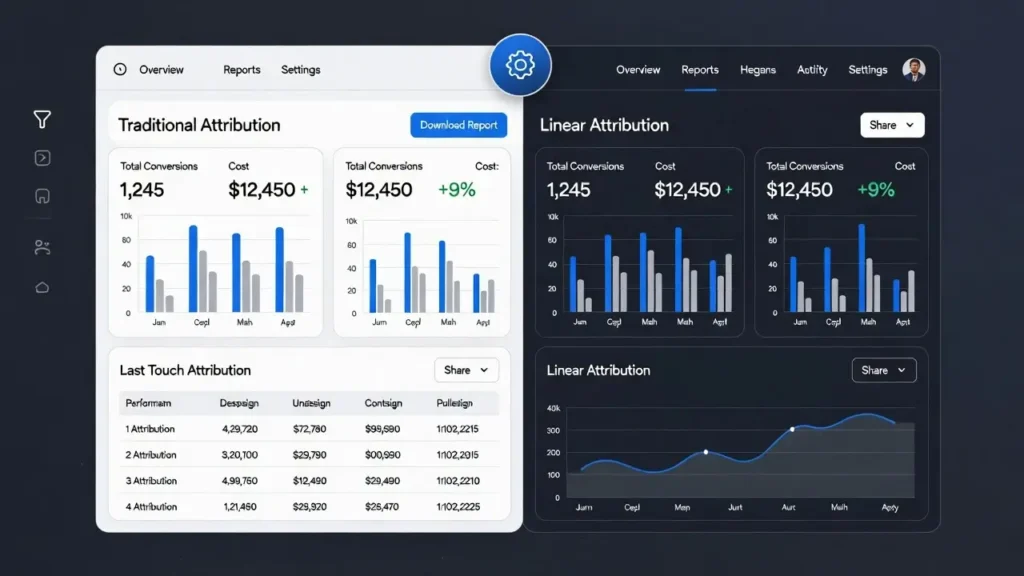
Meta has now incorporated ‘Statistical Modeling’ into its default reporting.
- Impact on ROAS: You can no longer rely solely on 7-day clicks or 1-day views. The new update introduces ‘Total Incremental Value’ reporting, which shows how many sales you would have lost if you hadn’t run Facebook ads. This is a better way for large U.S. brands to justify budgets.
5. New Ad Creative Optimization System
The “Creative Fatigue Detection” system has now been added to Advantage+ Creative.
- What happens?: As your creative performance begins to decline, Facebook automatically creates different combinations of your visuals (like changing the background or text overlays) to keep it fresh.
Comparison Table: Before November 2025 vs After Update
| Feature | Pre-November 2025 | Post-November 2025 |
| Audience Control | Manual Interest & Detailed LAL | Advantage+ AI-led Audience |
| Tracking | Browser Pixel (Heavy Reliance) | CAPI 3.0 (Server-Side Mandatory) |
| Creative Testing | Manual A/B Testing | Automated Iterative Creative |
| Attribution | Deterministic (Click-based) | Probabilistic & Incremental |
How These Updates Impact Different U.S. Industries
These updates have different implications for each business model. Here’s how you should adapt them to your industry.
eCommerce Brands (DTC)
November marks ‘Peak Season’ for e-commerce in the U.S. With the new updates, you’ll now need to feed your Advantage+ Shopping Campaigns with at least 10-15 different creatives (Statics, Reels, UGC).
- Strategy: Use “Broad Targeting” and let AI decide which product to show to which customer. Turn on “Dynamic Creative Optimization” in catalog ads.
Local Service Businesses
If you’re a real estate agent in Florida or run a roofing service in Texas, Advantage+ Lead Ads is now a boon for you.
- Strategy: Shorten the form-filling process and use “Conditional Logic.” Facebook’s new update scores lead quality based on their past behavior.
SaaS Companies
For software companies, Meta has improved ‘Deep Funnel Optimization’.
- Strategy: Don’t optimize only for “Sign-ups.” Send “Active Subscription” or “Trial-to-Paid” data back to Facebook using CAPI 3.0. This will help Facebook find people who actually pay.
Info Product Creators
“Community-based targeting” has become more difficult for those selling courses and coaching.
- Strategy: Focus all your attention on the first 3 seconds of the ad (The Hook). Since targeting has become broader, your creative is your new targeting.
Step-by-Step Strategy to Adapt to Facebook Ads Updates November 2025
As a strategist, I recommend following these 5 steps:
- Audit Your Current Campaigns: See which of your old interest groups are no longer working. If your audience size is too small, expand it.
- Upgrade to CAPI 3.0: If you’re still relying solely on the pixel, you’re losing 30% of your data. Immediately configure the latest version of the Meta Conversion API through Shopify or WordPress.
- Shift to Creative-Centric Testing: Stop wasting time on ad technical setup. Test at least 3-5 new video hooks per week. “UGC (User Generated Content)” still delivers the highest ROAS in the U.S. market.
- Improve First-Party Data: Regularly upload your email list and customer phone numbers to Meta. This serves as ‘seed data’ for the AI.
- Automate Bidding Correctly: Use ‘Cost Cap’ only when you have a clear understanding of your margins; otherwise, let ‘Highest Volume’ bidding do the work for the AI.
Common Mistakes U.S. Advertisers Will Make After November 2025 Update
Even experienced marketers can make these mistakes:
- Over-Segmenting Campaigns: Creating too many small ad sets prevents the AI from learning.
- Ignoring Video Reels: Over 60% of time in the U.S. is spent watching Reels on Facebook/Instagram. Running only image ads is a mistake.
- Slow Response to Comments: Meta’s new algorithm also takes ‘Social Signals’ into account. Not responding to comments on ads can lower your Ad Score.
- Inconsistent Budgeting: Repeatedly increasing or decreasing the budget too much during the holidays puts the campaign back into the ‘Learning Phase’.
- Not Using Lead Filtering: Collecting leads without filtering lead generation ads is accumulating junk data.
- Static Ad Copies: Running the same headline for months.
- Neglecting Landing Page Speed: Facebook is now placing more importance on landing page experience.
- Comparing 2025 Data with 2020: The market has changed. Old benchmarks are no longer relevant.
Advanced Pro Tips from Performance Marketers
Here are some ‘Inside Secrets’ I use at my agency:
- The Power of ‘Broad’: In the U.S., we often run ads without any interest or lookalike criteria—only age, gender, and location. If your creative is great, Facebook’s AI will automatically find the best customers for you. This is called ‘Creative-led Targeting.’
- Post-Purchase Upsell Tracking: Don’t just track the first sale using CAPI. Send LTV (Lifetime Value) data.
- Horizontal Scaling: Instead of increasing the budget of a single ad set, create new ad sets with successful creatives and use different hooks.
Final Thoughts – Is Facebook Still Worth It in 2025?

These November 2025 updates make one thing clear: Meta is still the king of the digital advertising world, but the rules have changed. Victory will no longer belong to those who know the best ‘Targeting Hack,’ but to those with the best creative strategy and robust data infrastructure (CAPI).
In the competitive U.S. market, adapting to these changes is no longer optional, but mandatory. If you don’t update your strategy, your ROAS is sure to decline. But if you work together with AI, 2025 could be the most successful year for your business.
Are you ready to take your meta ads to the next level?
Get started with your tracking audit and see what AI can do for you.
FAQs – Facebook Ads Updates November 2025
Q1: Are Facebook ads more expensive now?
Yes, CPMs have increased by about 10-15% in the U.S. market, but AI has also improved conversion rates, maintaining a stable net ROI.
Q2: Should I still use Interest Targeting?
Only for the Testing Phase. Advantage+ Audience and Broad Targeting are more effective for scaling.
Q3: How difficult is it to set up CAPI 3.0?
If you’re using a platform like Shopify or BigCommerce, this is just a few clicks away. Custom sites may require a developer.
Q4: What should the minimum daily budget be after the November update?
In the U.S. market, at least $50-$100 per day is recommended for effective data learning.
Q5: Can AI edit my ads automatically?
Yes, under ‘Advantage+ Creative,’ Meta can automatically perform tasks like improving brightness, cropping images, and adding music.
Q6: Will the ‘Attribution Window’ changes impact my reporting?
Yes, you may see changes in the number of conversions in the dashboard as Meta is now using more modeling data.