
Freelancing vs job:
Choosing a career in 2026 is no longer as simple as it was a decade ago. According to a recent report by Upwork, 82% of freelancers are experiencing increasing opportunities in 2026, indicating a significant shift in the global workforce. Today, every young person is asking the same question: freelancing vs job – which path is right for the future?
When we compare freelancing vs job, we’re not just talking about money, but also about lifestyle, peace of mind, and future security. While traditional jobs offer stability, freelancing opens the door to unlimited growth and freedom. In this article, we’ll conduct an in-depth analysis based on the latest data from 2026, the impact of AI, and market trends to determine what’s best for your personality and goals.
What is freelancing and what are its advantages (in the context of 2026)?
Freelancing means working independently for various clients instead of being tied to a single company. In 2026, it’s no longer just a “side hustle,” but a full-fledged career. According to DemandSage data, 75% of freelancers are now earning as much as or more than they would in a full-time job.
5 major advantages of freelancing:
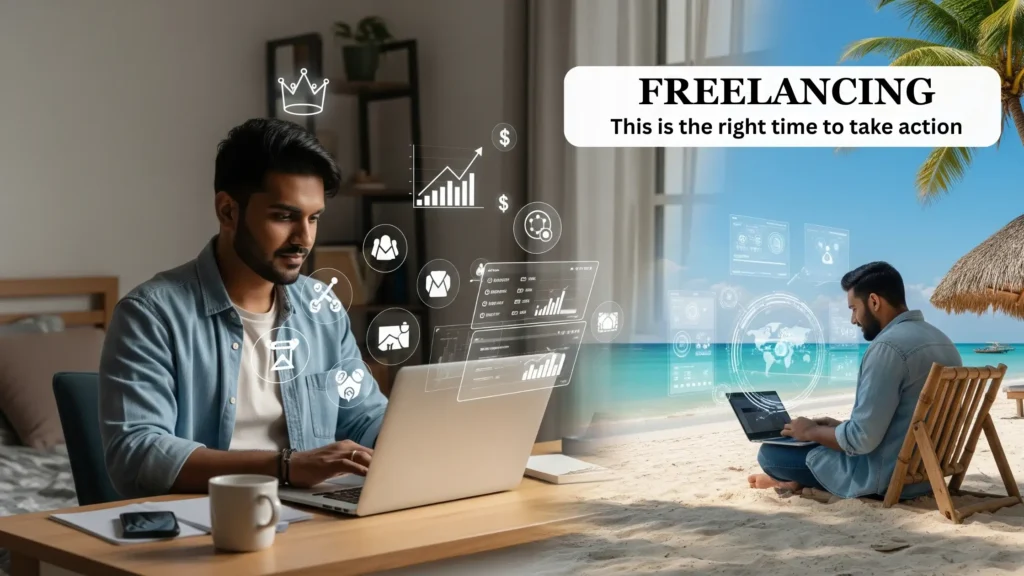
- 1. Freedom of time and location: You decide when and where you work. From a beach in Bali or your own bedroom.
- 2. Unlimited earning potential: Your salary isn’t fixed here. The more projects you take on, the more your freelance income will grow.
- 3. Skill diversification: You work for multiple industries simultaneously, expanding your experience.
- 4. Be your own boss: You don’t have to report to anyone; you make your own decisions.
- 5. Leverage AI tools: The impact of AI on freelancing in 2026 is positive; smart freelancers are using AI to complete their work three times faster.
This is why, in the debate between freelancing vs jobs, young people are increasingly shifting towards freelancing.
The advantages and challenges of a job (full-time employment)
Even today, a large segment of society prioritizes full-time jobs. “Job security” is a term that offers comfort in uncertain times. But will it be just as secure in 2026?
Job Benefits:
Regular Income: The feeling of having your salary credited on the 1st of every month reduces financial stress.
Additional Benefits: Perks such as health insurance, provident fund (PF), paid leave, and bonuses.
Social Structure: Networking and teamwork experience with colleagues in the office.
Job Challenges in 2026:
Lack of Flexibility: Fixed working hours and office politics can lead to mental fatigue.
AI and Layoffs: Many traditional roles are becoming obsolete due to automation.
Limited Growth: Your annual salary increase depends more on company policy than on your hard work.
Considering the 2026 career trends, most companies are now adopting a ‘hybrid work model,’ which blurs the lines between traditional employment and freelancing.
Freelancing vs Job: A detailed comparison
This comparison of freelancing vs jobs becomes particularly interesting when viewed through the lens of 2026. According to Upwork data, freelancing is projected to grow by 82% compared to 63% for traditional jobs. Let’s compare the parameters in a table:
| Parameter | Freelancing | Full-Time Job |
|---|---|---|
| Earnings | High potential ($39/hour; 75% earn as much or more than full-time) | Fixed salary (5-7% annual growth) |
| Work-Life Balance | High flexibility (70% more productive) | Medium (hybrid but fixed hours) |
| Risk | High (income can be unpredictable) | Low (security and benefits) |
| Growth Opportunities | 82% growth (Upwork data) | 63% growth |
| Skill Development | Self-driven (faster with AI tools) | Team-based (with mentorship) |
This table shows the core differences between freelancing and a full-time job. Freelancers earn more, but also face more risk.
Now, here’s the second table of 2026 trends:
| Trend | Impact on Freelancing | Impact on Full-Time Job |
|---|---|---|
| AI Integration | Positive (70% growth in AI gigs) | Negative (2M job losses, per Forbes) |
| Gig Economy | 50% workforce shift | Hybrid models (85% of companies) |
| Remote Work | Full flexibility (global clients) | Partial (some office return) |
| Economic Uncertainty | Easy to adapt | High layoff risk |
In the freelancing vs job debate, 2026 career trends favor freelancing. For example, AI has increased content writing gigs, but it’s also leading to automation in traditional jobs. According to DemandSage, freelancers report 40% personal growth. But why do 90% of freelancers fail? Medium articles suggest it’s due to poor positioning and pricing.
Overall, if you’re adaptable, freelancing wins. Otherwise, a job is the safer bet.
2026 Trends: Who will win?
The battle between freelancing and traditional jobs in 2026 will be heavily influenced by AI. According to Forbes, AI will make hiring more “human-focused,” where freelancers will shine with their human creativity. However, the impact of AI on freelancing is a double-edged sword – 70% growth in AI-related gigs, but repetitive tasks are at risk.
An Upwork study shows that the gig economy will drive 3.2% GDP growth. The prediction: freelancing will cover over 50% of the workforce. But why do 90% of freelancers fail? According to Medium, the high failure rate within 12 months is due to a lack of proper positioning, pricing, and AI strategies.
India-specific: Upwork reports a 20% increase in the number of freelancers in India in 2025, particularly in IT and design. According to the Upwork report (nofollow), Indian freelancers are securing projects worth $5000+. A Forbes article (nofollow) highlights AI as an opportunity.
The advantages of freelancing will prevail in 2026 if you embrace AI. Job stability will remain in hybrid roles. Overall, freelancing will lead the way.
Advice for Indian Youth: The Hybrid Approach
If you’re confused about whether to choose freelancing vs job, the best advice for 2026 is: “The Hybrid Approach.” Start freelancing alongside your 9-to-5 job. Once your freelancing income equals your salary, you can consider becoming a full-time freelancer.
Pro Tip: Always keep upgrading your skills. Be sure to read our [Freelancing Start Guide 2026] and [Career Growth Tips].
Conclusion:
In conclusion, the freelancing versus traditional job debate doesn’t end with a clear winner. If you value security and structure, a job is better. But if you’re willing to take risks and want to live life on your own terms, then freelancing is the best option in 2026. The future belongs to skills, not degrees.
What’s your opinion? Let us know in the comments: Is freelancing or a regular job better for you?
FAQ: Frequently Asked Questions
1. Which pays more: freelancing or a job?
Generally, there’s no limit to how much you can earn freelancing. An experienced freelancer can earn 2 to 3 times more than in a regular job, but there’s no guarantee of consistent income.
2. Is freelancing secure in 2026?
Yes, if you have in-demand skills (such as AI prompt engineering, data science), freelancing is even more secure than a job because you depend on multiple clients, not just one.
3. How to get started?
First, choose your niche, create a portfolio, and register on platforms like Upwork or Fiverr.
4. Can I do freelancing alongside a job?
Absolutely! This is called a ‘side hustle’. In 2026, most young Indians are adopting this model.
5. Will freelancing end with the advent of AI?
No, on the contrary, AI will make the work easier. Freelancers who know how to use AI tools will become more valuable in the market.